Unlock Your Cosmic Connection Today
Personalized predictions and Remedies based on Astrology and Vedic Vastu principles.


Doctor of Astrology
Vedic Vastu Consultant
Dr. Sanjeev Chaudhari
About Astrology
Astrology has a rich history spanning thousands of years, with its origins tracing back to ancient India during the Vedic era. The sages of this tradition revealed profound secrets, many of which remain beyond the grasp of rational explanation. Their insights, rooted in remarkable intuition, laid the groundwork for astrology as we know it today.
Visionaries like Parasara and Jaimini shaped the Eastern Hindu astrological system, which influenced later developments through Persian, Greek, and other cultures. However, astrology’s origins are not confined to a single source. The Mayans, Persians, Egyptians, and early Europeans developed their own systems, each linking celestial events to occurrences on Earth, showcasing a universal fascination with the cosmos.
History of Astrology
Astrology’s origins trace back to humanity’s earliest days, but its structured principles began emerging over 3,000 years ago. The great Hindu sage Parasara laid the foundation of sidereal astrology, or Vedic astrology, through his monumental work, Brihat Parasara Hora Shastra. This text remains a cornerstone for anyone studying this profound tradition.
Around the same period in Mesopotamia, the Chaldeans built Ziggurats—towering observatories up to 300 feet high—for stargazing. They were the first to divide the celestial sphere into the 12 zodiac signs we recognize today.
Astrology wasn’t limited to Indian and Chaldean traditions; Egyptians and Babylonians also contributed significantly. By the fifth century BCE, Chaldean knowledge reached Greece, profoundly influencing thinkers like Plato, who referred to the Sun, Moon, and planets as “visible gods,” reflecting his deep connection to the celestial sciences.
How does Astrology work?
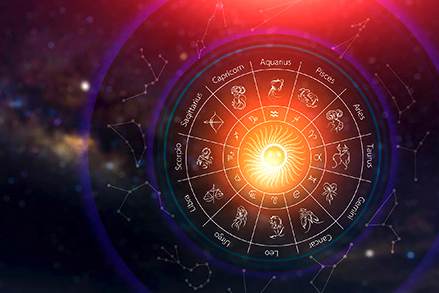
Astrology examines the 12 zodiac signs, 9 planets, 27 lunar mansions of the Vedic tradition, and countless stars, each influencing life to varying degrees. By analyzing planetary movements through signs and stellar sectors, along with their interactions, astrology mirrors natural cycles and reveals their impact on both collective and individual levels of terrestrial life.
Skeptics often argue that astrology lacks a scientific foundation, and while traditional explanations may not always align with modern science, the Vedic tradition offers thousands of years of oral and written wisdom. These time-tested principles, though not universally proven, demonstrate practical validity in many instances, highlighting the need for continued research and collaboration among astrologers.
The foundation of astrology is light, known in the Hindu tradition as Jyotish or “the science of light.” Ancient Indian sages intuitively understood the connection between celestial light and earthly life—a concept echoed in modern science through photosynthesis, where sunlight drives the creation of food. This relationship underscores astrology’s relevance in exploring the intricate links between cosmic phenomena and life on Earth.
Science behind how it works
There is a scientific field known as biophotonics, which studies how light influences biological processes. This area focuses on the generation, manipulation, and detection of photons, the quantum units of light. When planets pass through the radiation from different stars, they alter and modify that radiation.
Each star emits different frequencies, visible in its spectral color. For example, a red star is an older star and has reached the iron stage of its life cycle. The chemical information of the star might be encoded in the light it emits, which then travels across space and time.
If, as some astrologers suggest, the planets’ interactions with these background stars—at significant positions in a person’s birth chart—hold any weight, then individuals may be influenced by these spectral packets of chemical information. These interactions could impact their lives in subtle ways. For example, I’ve observed individuals with prominent Mars or red star influences often having a reddish complexion, strawberry blonde or red hair, and a strong, combative spirit—traits that align closely with classical astrological descriptions. More research in this area is needed to explore these potential connections further.
Bio-photonics
Our Astrology Services
Explore personalized readings and structured courses tailored to guide you through astrology's insights.
Astrology Consultations
Receive clarity on life's challenges with our detailed personal horoscope consultations tailored to your needs.
Professional audits of your Vastu and guidance on Vastu dosh corrections, based on pure Vedic Vastu principles.
Vedic Vastu Consultation


Email: astrosanjeev@outlook.in
Contact: +91 9049004731
© 2025. All rights reserved. Knowledgework Solutions
Social connects
Payment QR Code


Or use this Payment link